We are pleased to share our latest work, “𝗔𝗹𝗹-𝗼𝗽𝘁𝗶𝗰𝗮𝗹 𝗵𝗶𝗴𝗵-𝘀𝗽𝗲𝗲𝗱 𝗽𝗿𝗼𝗴𝗿𝗮𝗺𝗺𝗮𝗯𝗹𝗲 𝗻𝗼𝗻𝗹𝗶𝗻𝗲𝗮𝗿 𝗮𝗰𝘁𝗶𝘃𝗮𝘁𝗶𝗼𝗻 𝗳𝘂𝗻𝗰𝘁𝗶𝗼𝗻𝘀 𝘂𝘀𝗶𝗻𝗴 𝗮 𝗙𝗮𝗯𝗿𝘆–𝗣𝗲𝗿𝗼𝘁 𝗹𝗮𝘀𝗲𝗿”, which advances the development of fully optical, programmable nonlinear activation units for photonic neural networks.
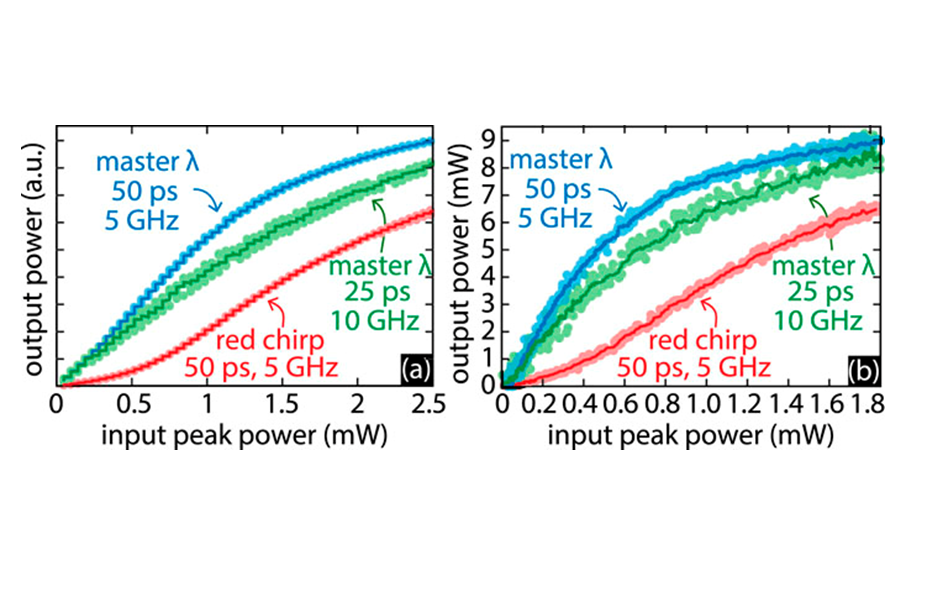
In this paper, we demonstrate how a semiconductor laser under single and dual optical injection can act as a high-speed, reconfigurable nonlinear element. By achieving an excellent agreement between the theoretical model and experimental measurements, the study confirms the predictive strength and robustness of our model, which accurately captures the underlying physics of optical nonlinearities.
𝗞𝗲𝘆 𝗵𝗶𝗴𝗵𝗹𝗶𝗴𝗵𝘁𝘀 𝗶𝗻𝗰𝗹𝘂𝗱𝗲:
⚡ Rapid nonlinear responses at high data rates
🔧 Programmability using optical control signals
📉 The ability to implement various activation profiles (e.g., sigmoid-like, saturating behaviors) entirely in the optical domain
🔋 Very low energy consumption per nonlinear operation, making it suitable for integration into next-generation photonic systems
The work also presents an early-stage validation, demonstrating the feasibility of using Fabry–Pérot laser diodes as building blocks for scalable, all-optical neural network architectures that operate at ultrafast speeds with minimal energy cost.
Read the full paper here